What "Boat Access" Actually Means Once You're Inside Waterway Plantation's Gates
August 20, 2026
August 20, 2026
Two listings sit side by side in the same gated section of Carolina Waterway Plantation. One is a lot near $200,000. The other is a finished custom home well past a million dollars. Both list sheets say the same three words: boat access included. A buyer scrolling portals with no other context would reasonably assume the cheaper property is simply smaller, or older, or missing a pool. The real answer is more specific, and it matters a lot more if boating is why you're looking at this community in the first place.
Inside this Carolina Forest neighborhood, "boat access" describes two different things depending on which lot you buy. One version is a shared community amenity that every homeowner gets for a modest monthly fee. The other is a private structure attached to a specific parcel of land, and no amount of extra HOA dues will get it added to a home that doesn't already have it. Confusing the two is the single most common way a boat-focused buyer ends up disappointed after closing.
Walk through how the community itself describes its own amenities and the pattern is consistent across nearly every source: a gated boat ramp, a day dock, and a fenced storage area for boats and trailers, all bundled into the HOA. That package runs somewhere in the neighborhood of $105 to $115 a month, which is genuinely inexpensive for waterfront-adjacent living on the Grand Strand.
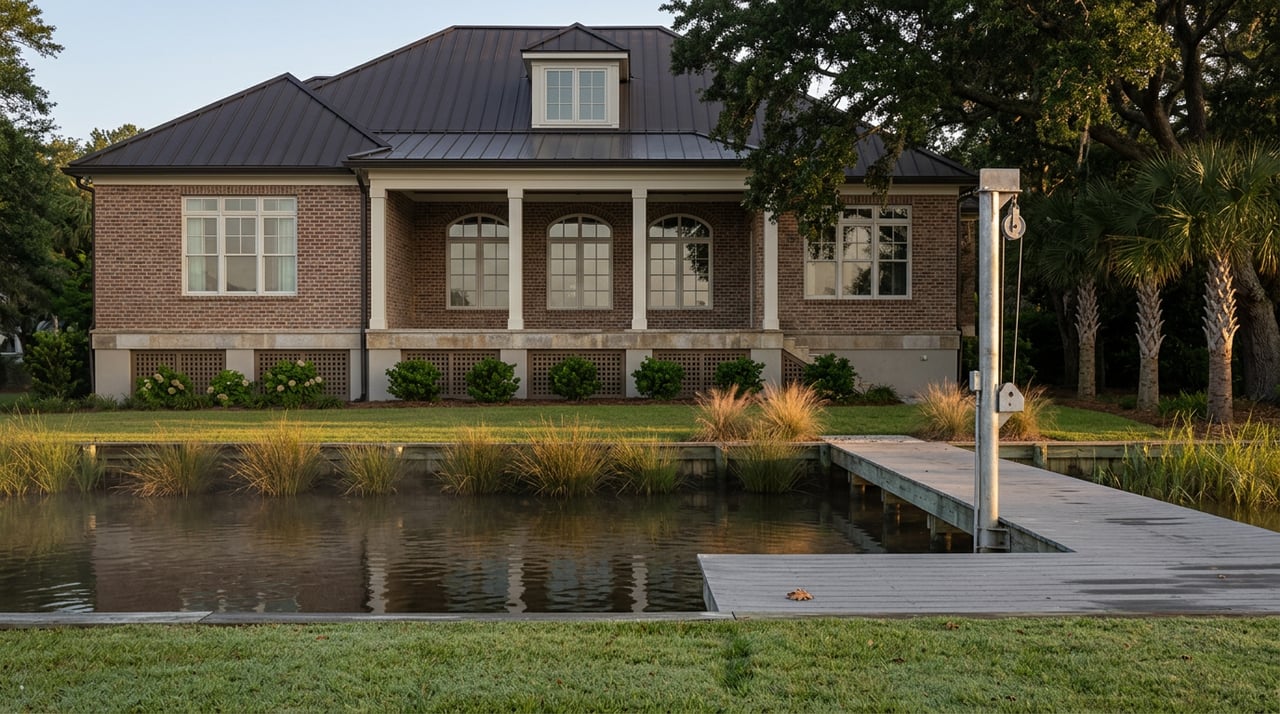
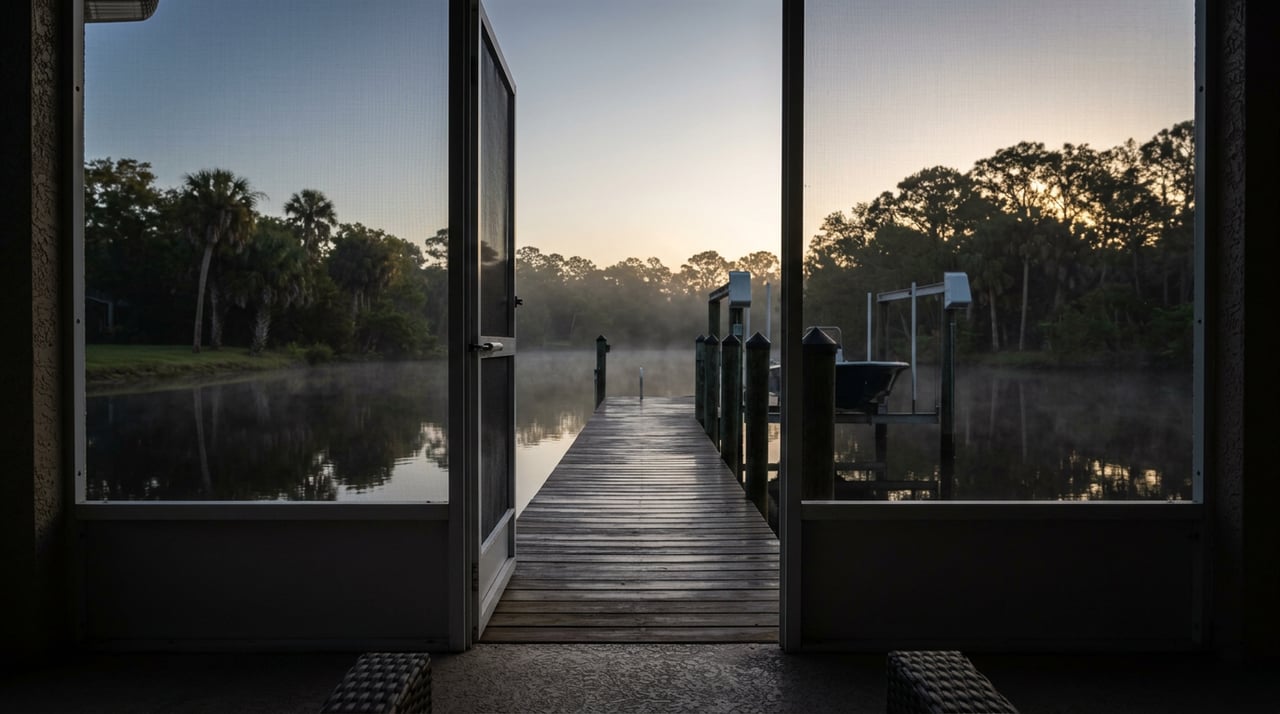
Then, buried inside individual listing descriptions rather than the community overview, you find a different feature entirely: a private dock with a boat lift sitting directly behind a specific house. One recent listing described a dock built with a 20,000-pound lift and an eight-foot dredge wall, giving that homeowner direct, unshared access to the Intracoastal Waterway from their own backyard. That is not a community amenity. It is a lot-level improvement that exists because that particular parcel happens to sit on the waterway row.
Community materials even disagree on how large the neighborhood is, with some describing roughly 100 homesites and others citing a larger footprint. That inconsistency is a small thing on its own, but it's a useful reminder that marketing copy for this community, like most gated Carolina Forest neighborhoods, gets recycled across multiple brokerage sites without much scrutiny. The boat access language deserves the same scrutiny.
If you buy any home or lot inside the gates, your HOA dues buy you three things: use of the community boat ramp to launch a vessel into the Intracoastal Waterway, access to a day dock for loading and unloading, and a spot in the gated storage area for a boat or trailer when it's not on the water. This is real value. You do not need waterfront footage to own a boat and use this neighborhood as your home base for it.
What this shared system does not include is a place to leave your boat tied up overnight in the water behind your own house. The day dock is built for loading, not long-term mooring. If your plan is to walk out your back door and step onto your boat, the shared amenity package does not deliver that, no matter how the listing headline reads.
A private dock with a lift is tied to the land, not the buyer. It shows up in listings for homes that back directly onto the Intracoastal Waterway, and it's typically described in detail because it's a genuine differentiator: lift capacity, dredge wall depth, sometimes a boardwalk or seawall connecting the dock to the yard. These are structural investments a previous owner made because their lot allowed it, and they transfer with the property the same way a pool or an outdoor kitchen would.
Here's the part that trips people up: an interior lot in this same community, even a large and expensive one, cannot simply add this feature later by paying more into the HOA. The physical adjacency to the waterway is what makes a private dock possible. If your lot doesn't touch the water, your access runs through the shared ramp and storage system, full stop.
| Shared Community Access | Private Waterfront Dock | |
|---|---|---|
| Available to | Every homeowner in the gated section | Only lots backing directly onto the ICW |
| What's included | Boat ramp, day dock for loading, gated boat/trailer storage | Private dock, often with a boat lift, sometimes a seawall or dredge wall |
| Cost structure | Bundled into HOA dues, roughly $105 to $115 a month | Built into the home's purchase price as a lot-level feature |
| Best for | Boat owners who don't need overnight water access at home | Buyers who want to walk from the yard to the boat |
| Transfers with | The HOA membership, not any specific lot | The specific parcel it's built on |
This is the part that actually explains the numbers a buyer sees on the portals. Recent resale activity inside Carolina Waterway Plantation has ranged from lots and entry homes priced under $200,000 up to custom waterfront builds well north of a million dollars, sometimes inside the same handful of streets. Square footage and finish level explain some of that spread. Whether the lot touches the Intracoastal Waterway with a deeded or buildable dock explains a much bigger piece of it than most buyers assume when they're comparing listings by bedroom count alone.
If you're shopping by price per square foot and can't figure out why two similarly sized homes land $400,000 apart, check the plat before you check the paint colors. The waterway-row premium in this community is real and it's driven almost entirely by dock access, not by the pool or the kitchen upgrade.
Grand Strand boat slips generally fall into a few ownership structures: deeded slips you own outright and can sell like a piece of property, leased slips you rent, membership slips tied to a club, and restricted-ownership arrangements with conditions attached. A private dock behind a Waterway Plantation home functions more like the deeded model. It's yours because you own the land it sits on. The community ramp and storage, by contrast, work more like a membership benefit that comes and goes with your HOA status, not something you can sell separately from the house.
It's also worth knowing that boat storage capacity has been tightening across the Lowcountry more broadly, with newer marina facilities filling up well before peak season and waitlists stretching for months in some Charleston-area facilities. Waterway Plantation's own storage area is smaller and gated to residents only, which insulates it somewhat from that regional pressure, but it's still a shared, finite resource. If you're counting on that storage lot for a boat and trailer, ask the HOA management company about current usage before you assume there's an open spot waiting.
For a sense of how the Intracoastal Waterway itself is maintained here, the Army Corps of Engineers keeps the South Carolina portion of the AIWW at a federally authorized depth of 12 feet at mean low water and at least 90 feet wide, which is the baseline that makes ramp and dock access reliable in normal conditions along this stretch.
Can I add a private dock to an interior lot later? Only if that lot has direct frontage on the Intracoastal Waterway and permitting allows it. Most interior lots in this community do not touch the waterway, which is why the shared ramp and day dock exist in the first place.
Is the HOA fee the same for waterfront and interior lots? Community materials describe one HOA structure covering the shared amenities for all homeowners. A private dock is typically owned and maintained by the individual homeowner rather than the HOA, so upkeep costs for that structure fall outside the standard dues.
If you're comparing waterway communities in Carolina Forest and want someone to walk a specific lot's plat with you before you fall for the words "boat access" on a listing sheet, Karen Knight can help you figure out exactly what you'd be buying, and what you wouldn't.
Stay up to date on the latest real estate trends.
Get assistance in determining current property value, crafting a competitive offer, writing and negotiating a contract, and much more. Contact Karen today.