The Fleet That Passes Waterway Plantation Every Fall, And Where It's Headed
September 3, 2026
September 3, 2026
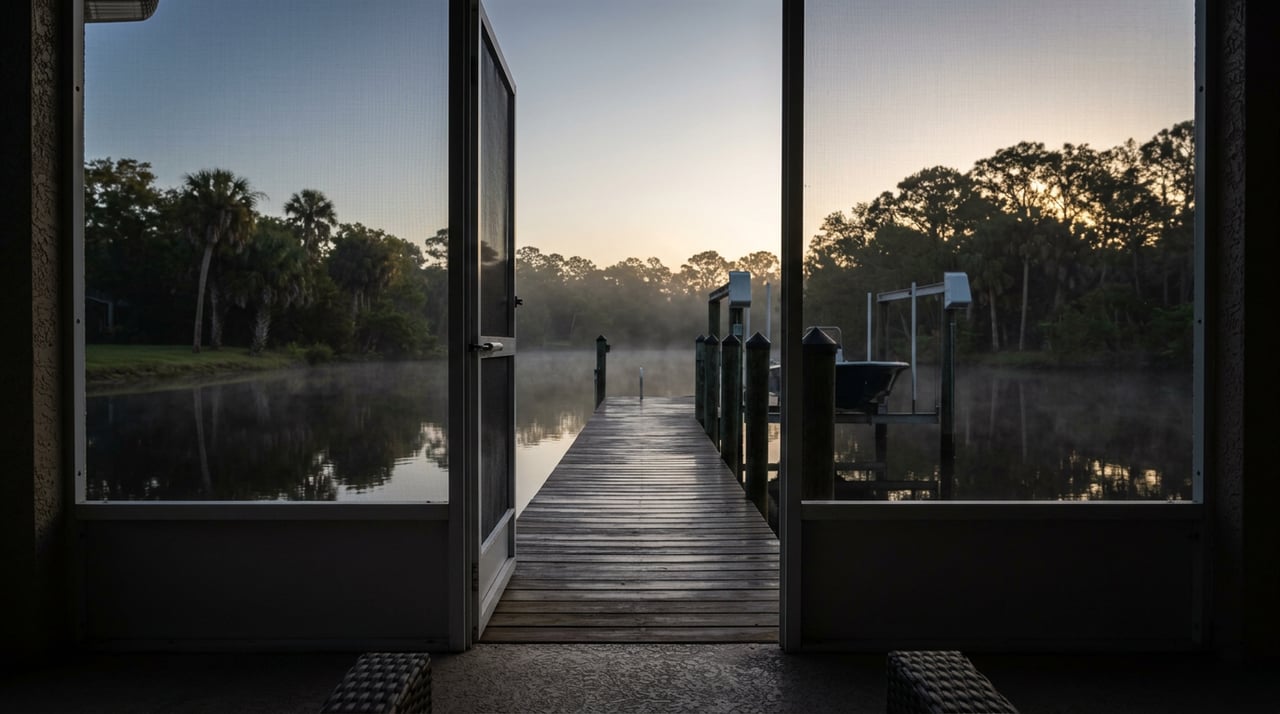
Somewhere around the third week of October, a Waterway Plantation homeowner will stand on the patio with a cup of coffee and notice something odd. The Intracoastal Waterway behind the house, usually a quiet stretch of dark water with the occasional neighbor's pontoon boat, has turned into a procession. Trawlers. Sailboats with masts stripped down for bridge clearance. A steady, unhurried line of boats moving south, one after another, for days.
It is not a fluke, and it is not your neighbors buying new boats. It is a migration, and it happens on a schedule almost as reliable as the geese.
The boats gliding past the docks in Carolina Waterway Plantation each fall belong almost entirely to strangers. Boating publications that track this corridor describe a real annual pattern: cruisers leave the Chesapeake Bay region after the Annapolis Boat Show in October and aim to reach Florida before hurricane season officially closes on November 30. Boaters and cruising guides call this crowd snowbirds, the same word used for retirees who drive south for the winter, except this version tows nothing behind a truck. Their whole home moves under its own power, one bridge opening at a time.
The Atlantic Intracoastal Waterway Association has long estimated that thousands of recreational boaters make this north-south run every year, a mix of first-timers delivering a boat to a winter marina and veterans who have done the passage a dozen times. Waterway Plantation sits on one of the legs they have to travel, which is why a resident's own dock becomes, for about six weeks, a front-row seat to someone else's road trip.
There is a second reason the view feels unusual, and it has nothing to do with volume. The stretch of Intracoastal that runs past Carolina Forest is fed by the Waccamaw and Pee Dee watersheds rather than the ocean, which means it runs freshwater and tannin-dark from the cypress trees upstream. No saltwater corrosion on a private dock's hardware, no jellyfish drifting past the boat ramp, and the water itself has that blackwater tint locals are used to but out-of-town boaters often mention as one of the more memorable parts of the trip.
The fall rush is not evenly spread across the season. It clusters. Boats start showing up in meaningful numbers once the Chesapeake fleet clears out after the October boat show, and the traffic tends to hold through Thanksgiving as owners try to beat the calendar and settle into a Florida marina before December.
The reverse trip happens too, boats heading back north once the worst of winter breaks, but it spreads out more loosely across the spring and doesn't create the same concentrated window that late October and November do here.
For a resident trying to figure out when the water in front of the house will be busiest, the short version is this: watch for the surge starting in the back half of October, expect it to hold through most of November, and expect the water to go quiet again well before the holidays.
A lot of these boats have already spent a night in North Myrtle Beach before they ever reach the water outside Waterway Plantation. Barefoot Marina shows up again and again in first-person accounts from cruisers making this same run, usually as an overnight stop after crossing back in from the ocean near Little River Inlet. From there, the route continues into the Waccamaw River, the same freshwater leg that runs past Carolina Forest on its way toward Georgetown.
One couple who made the passage in a Grand Banks trawler described tying up at Barefoot Marina one evening and picking up the Waccamaw the next morning, calling it the most scenic stretch of the whole trip. Their account, published in a boating magazine that tracks the migration, put it simply:
"we enjoyed becoming part of the larger boating community that forms from the snowbird fleet heading south"
That is what a Waterway Plantation resident is actually watching each fall. Not random boat traffic, but a loose, informal community of cruisers who slept in North Myrtle Beach last night and will be tied up somewhere in Georgetown or beyond by tomorrow, all funneled through the same bend of water that happens to run behind these backyards.
Waterway Plantation isn't the only address paying attention to this stretch of the Intracoastal. A couple of local operators make their living on the exact same water and can tell residents, in more detail than any brochure, what is actually out there.
Waccamaw River Tours runs narrated pontoon trips out of Enterprise Road, just off the same corridor, taking visitors back into the cypress-lined creeks of the Waccamaw National Wildlife Refuge in search of osprey, herons, and the occasional alligator sunning on a log. A resident does not need to book a tour to see the same wildlife. Ospreys build their nests in the tall trees along this stretch every year, and the birds a tour guide points out to paying customers are the same ones nesting within view of a private dock.
Island Adventure Watersports operates out of Dick Pond Road, renting pontoons and running backcountry jet ski trips through those same wildlife refuge channels. Their own description of the area sums up something worth knowing if a resident has never taken a boat out from the community launch: South Carolina does not require a boating license, so a family with dock access and a boat of their own can be out on the water the same afternoon they decide to go.
Between the two operators and the fall migration passing through, this bend of the Intracoastal carries a mix of locals headed out for an afternoon, tour boats pointing out wildlife, and out-of-state cruisers on their way somewhere else entirely, all sharing the same short stretch of water at the same time of year.
A few things make it easy to tell the difference between a neighbor's boat and a snowbird passing through, without needing binoculars or a marine radio.
None of this means anything has changed about the neighborhood itself. The traffic outside Waterway Plantation each October and November is a temporary, dated population passing through on a schedule set by hurricane season and the Florida calendar, not a permanent shift in how busy this stretch of the Intracoastal actually is. By December, the parade thins out, and the water goes back to being what it is the rest of the year: quiet, dark, tannin-stained, and mostly local.
Understanding that rhythm is part of what makes living on this bend of the waterway interesting rather than confusing. The fleet passing by each fall isn't a sign of anything wrong. It's a sign that a lot of other people are still finding their way down the same stretch of water that this community has called home all along.
If watching someone else's boat idle past your dock every October has you thinking more seriously about your own stretch of waterfront, Karen Sells the Coastal Carolinas can walk you through what's currently available directly on the Intracoastal in and around Carolina Forest.
Stay up to date on the latest real estate trends.
Get assistance in determining current property value, crafting a competitive offer, writing and negotiating a contract, and much more. Contact Karen today.