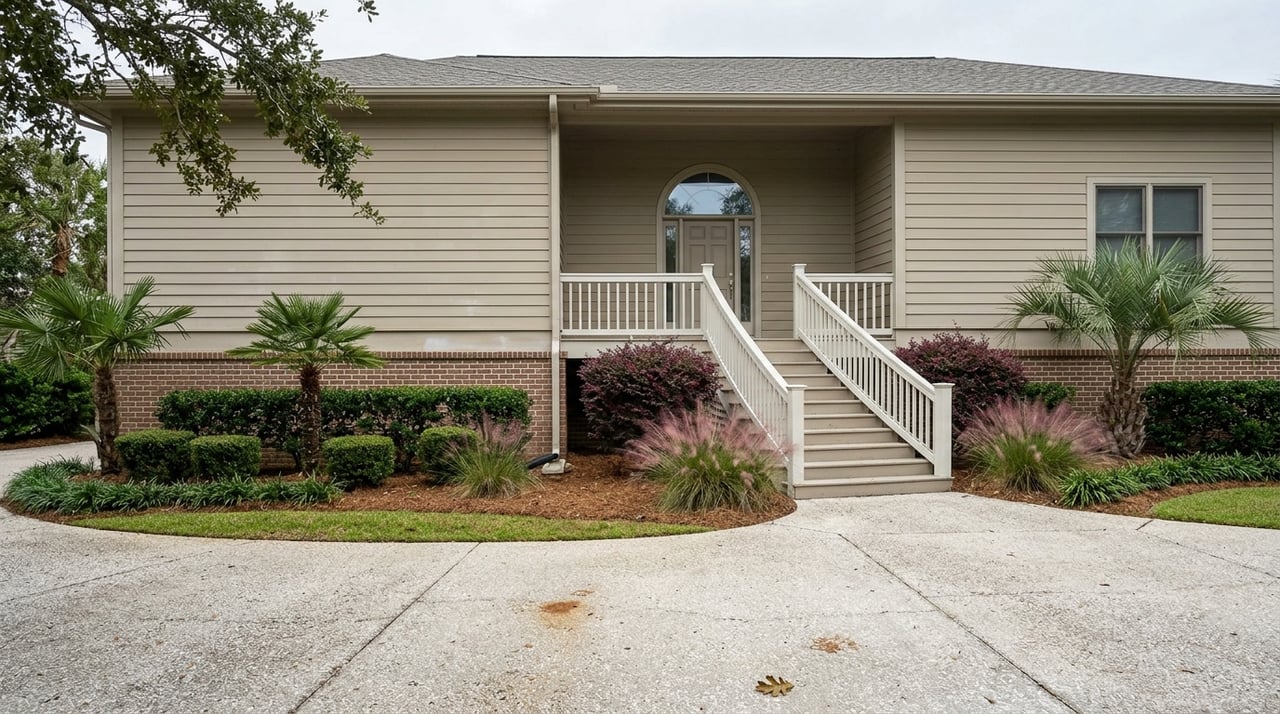
The Document That Actually Controls Your Tidewater Plantation Closing Date
August 27, 2026
August 27, 2026
Ask around Tidewater Plantation long enough and you'll hear a version of the same story: financing cleared weeks early, the inspection came back clean, and then the closing date slipped anyway because someone was waiting on paperwork from an HOA board that meets once a month. In a community built the way Tidewater is, with a golf-course spine and several distinct pockets of ownership along Little River Neck Road, that paperwork problem is not a fluke. It is baked into how the community is governed, and it interacts with a South Carolina closing process that already works differently than what many buyers, especially those coming from just across the state line, expect.
South Carolina is one of a small number of states that treats a real estate closing as the practice of law rather than a paperwork appointment a title company can run on its own. The South Carolina Supreme Court settled this in State v. Buyers Service Co. back in 1986, and the rule has held ever since: a licensed South Carolina attorney has to supervise the title search, prepare and review the closing documents, and personally oversee the disbursement of funds. Roughly 22 states require some form of attorney involvement in closings, but South Carolina is among the smaller group that also requires the attorney to be physically present.
For a buyer, this usually means budgeting $800 to $2,000 for flat-fee legal representation, sometimes with the title search billed separately at $300 to $600. It also means the attorney's office, not a nationwide title company processing center, is the one chasing down documents on your timeline. That distinction matters more in a community like Tidewater than it would in a simple single-HOA subdivision, because the documents your attorney needs are not coming from one place.
The name on the gate is Tidewater Plantation, and the master structure is the Tidewater Plantation Community Association. But the properties inside that gate are not all governed by the same set of rules or the same board. Condo buildings inside Tidewater operate as their own sub-associations, each with its own board, its own budget, and its own dues schedule, separate from the association that governs the detached single-family sections. Public listing data has shown homeowners association costs running around $179 to $190 a month for some single-family homes and closer to $359 a month for at least one condo unit, a gap that only makes sense once you understand these are functionally different associations, not one fee schedule applied unevenly.
That structure changes what your closing attorney has to do before you can sign anything. Before a sale can close, the seller's association has to issue a resale certificate, sometimes called an estoppel letter, confirming the current dues, any unpaid balances, upcoming assessments, and whether any lien has been filed. In a single-master-HOA neighborhood, that's one phone call. In Tidewater, it depends entirely on which sub-association governs the specific address, and boards that meet monthly or manage documents part-time do not always turn these around on a buyer's mortgage timeline.
| Detached single-family section | Condo sub-association | |
|---|---|---|
| Governing body | Tidewater Plantation Community Association | Individual condo regime board |
| Typical monthly dues (from public listings) | Roughly $179 to $190 | Roughly $359 |
| Resale document needed | Community Association resale certificate | Regime-specific resale certificate or estoppel |
| Who to ask first | Community Association management | The specific building's HOA management |
The practical takeaway: knowing you're buying "in Tidewater" isn't enough information for your attorney to start pulling documents. Knowing which section and which board is.
This is where the state line actually changes the math for anyone comparing a Tidewater Plantation purchase against a property in coastal North Carolina, including communities like Sea Trail Plantation just up the coast. North Carolina's standard contract structure includes a due diligence fee, a small non-refundable payment the buyer makes directly to the seller in exchange for the right to walk away during the inspection period. It compensates the seller for taking the home off the market while the buyer investigates.
South Carolina's contract has no equivalent fee. During the due diligence period here, a buyer's only financial exposure is the actual cost of inspections, and earnest money isn't put at risk until that period expires. That sounds like a small mechanical difference, but it shifts leverage. A South Carolina seller in Tidewater is carrying more of the timeline risk than a North Carolina seller would be, because nothing compensates them if a slow-moving resale certificate stretches the due diligence window and the buyer decides to walk at zero cost. If you are the seller and your property sits inside one of the condo sub-associations known for a slower document turnaround, that timeline risk is worth naming out loud to your attorney and agent before you accept an offer, not after.
For buyers, the flip side is real too: South Carolina's structure is more forgiving if a resale certificate delay pushes your closing date. You are not bleeding a non-refundable fee while you wait.
One more difference worth knowing before you're staring at a due diligence deadline: South Carolina does not require a general home inspection as a condition of closing. What it does require, on nearly every financed transaction, is a wood-destroying insect inspection, commonly called a WDI letter, addressing termites and similar pests. In a coastal climate like North Myrtle Beach, that inspection turns up findings often enough that it becomes a real negotiation item, separate from and sometimes more contentious than the general inspection most buyers assume is mandatory. A general inspection is still strongly advisable in a wood-frame or shingle-sided home near the marsh, but it is a choice you make, not a box the state checks for you.
A few questions, asked early, save weeks later:
Do I have to use the same attorney as the other party? No. Buyers typically choose the closing attorney in South Carolina, and sellers are free to hire their own to review documents and protect their side, especially on a higher-value sale.
What exactly is a resale certificate? It's the document an association issues confirming current dues, any unpaid balances, pending special assessments, and whether the property carries any association lien. Your closing attorney needs it before closing can proceed.
Does every property in Tidewater pay the same HOA fee? No. Dues differ by section and by which association governs the property, which is why a buyer comparing two Tidewater listings side by side needs the specific fee for each address, not a community-wide average.
Is a general home inspection required in South Carolina? No. A WDI letter addressing wood-destroying insects is the inspection South Carolina effectively requires through standard practice on financed deals. A general inspection is optional but recommended, particularly on an older home near the marsh.
Closing on a home inside a gated, multi-association community like Tidewater rewards buyers and sellers who ask the boring questions early. If you're weighing a purchase here, or trying to time a sale around one of these sub-association timelines, Karen Sells the Coastal Carolinas can help you figure out which board governs your address before it becomes a problem at the closing table. Start Your Coastal Home Search today.
Stay up to date on the latest real estate trends.
Get assistance in determining current property value, crafting a competitive offer, writing and negotiating a contract, and much more. Contact Karen today.