Guide To Buying A Vacant Lot In Waterway Plantation
June 11, 2026
June 11, 2026
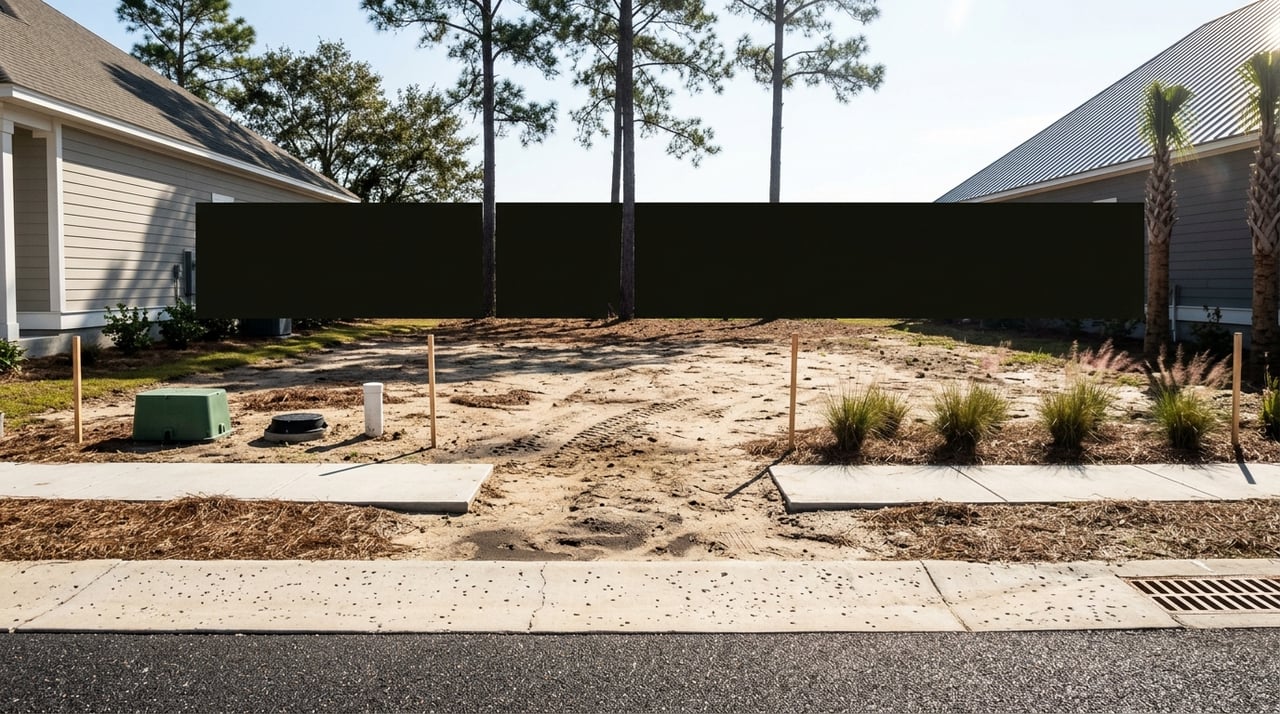
Buying a vacant lot in Waterway Plantation can feel simple at first glance. You find a homesite you like, picture the house you want, and start planning the fun parts. But in Carolina Forest, the smart move is to slow down and check the details first. If you do that work early, you can avoid costly surprises and move forward with more confidence. Let’s dive in.
When you buy a vacant lot, you are not just buying land. You are also buying into a set of rules, physical site conditions, utility questions, and permit requirements that can affect what you build and when you can build it.
In Carolina Waterway Plantation, the most important first step is reviewing the community documents. The public HOA portal provides the CCRs, bylaws, master deed, ARC guidelines, and a community site plan. Those documents help you understand what can be built, where it can sit on the lot, and what exterior standards may apply.
One of the biggest early questions is whether the specific parcel is inside the City of Myrtle Beach or outside city limits. Current sources show that jurisdiction can vary by parcel within Carolina Waterway Plantation, so you should not assume all lots follow the same permit path.
That matters because the approval process changes based on location. If your lot is inside the city, the City of Myrtle Beach permit process may involve zoning, flood, building, electrical, plumbing, landscaping, engineering, planning, fire, addressing, and business license approvals. If the lot is outside city limits, Horry County Planning and Zoning handles county zoning and land development rules.
Before you make an offer or during your due diligence period, read the HOA documents carefully. In a community like Carolina Waterway Plantation, those records can shape the size, placement, and design of the home you hope to build.
The ARC guidelines are especially important. They may outline approval steps for exterior materials, placement on the lot, and other design standards. A lot may look build-ready online, but the governing documents are what help confirm how your plan fits community requirements.
Recent listings also indicate that buyers may be able to choose their own builder and that some lots may not have a required timeline to begin construction. Still, you should confirm those points directly through the community documents and HOA before you rely on them.
County parcel records and GIS maps are useful starting points, but they are not a substitute for a survey. Horry County specifically notes that its GIS and land records are for taxing purposes, not survey purposes.
That means you should hire a licensed surveyor and pair that work with title review. This helps you confirm boundaries, setbacks, easements, and any encroachments before closing. It is one of the most important steps for a vacant-lot purchase.
Horry County also states that sheds, fences, landscaping, and other structures should not be placed in drainage easements, swales, or ditches. If work affects a county or public easement, an encroachment permit may also be required.
In a coastal market, flood and drainage questions should never wait until the last minute. Before closing, pull the flood map information and ask how water moves across or around the site.
Horry County’s flood map tools are based on FEMA and county GIS data, and the county states that it participates in the National Flood Insurance Program. The county also says flood insurance is highly recommended, and federally related loans require flood insurance in Special Flood Hazard Areas.
Stormwater also deserves close attention. Horry County notes that many stormwater systems are privately owned, including stormwater ponds, and HOAs should inspect ponds, pipes, swales, and ditches. That is a good reminder that drainage conditions can affect both your building plans and your long-term ownership costs.
A beautiful lot is not enough on its own. You also need to know what utility service is available, where connections are located, and whether any tap fees or installation costs may apply.
For water and sewer, GSWSA service in this broader area includes the Carolina Forest and Socastee corridor through the Schwartz South Strand Regional plant, while its Myrtle Beach plant serves Myrtle Beach. Electric service should also be confirmed directly, and Horry Electric is the local electric cooperative referenced in current source material.
The key is simple: verify service availability for the exact lot. You want clear answers on utility access, meter location, and any setup costs before you finalize the purchase.
Waterfront lots can offer exciting future options, but they also come with more layers of review. If you hope to add a dock, pier, or other water access feature later, that work may require approvals beyond your standard home build.
South Carolina’s Bureau of Coastal Management reviews critical area permits, and dock planning may involve a Dock Master Plan. A public notice tied to a Carolina Waterway Plantation lot also shows that dock and dredge work in this subdivision can trigger separate state and federal review.
The permit path depends on jurisdiction, and that is why verifying the parcel location comes first. Inside the City of Myrtle Beach, the residential permit packet shows a multi-department review process. It also states that a permit can become void if work does not start within six months.
Outside city limits, Horry County Planning and Zoning administers zoning and land-development rules. Even when the lot itself looks straightforward, review time can expand if there are questions about flood, drainage, utilities, access, or HOA approvals.
If you want to reduce surprises, follow a step-by-step approach. The strongest vacant-lot buyers usually confirm the rules and site conditions before they get emotionally attached to a house plan.
This order helps you make better decisions while you still have room to negotiate, pause, or move on to another lot if needed.
A few questions come up again and again with vacant lots here. Can you choose your own builder? Recent listings indicate yes in some cases. Is there always a build-start deadline? Some recent listings say there may not be one, but you should verify that with the HOA and current lot details.
Another common question is whether you can add a dock later. That may be possible on certain waterfront parcels, but it is not something to assume. HOA review and coastal permitting can both affect that plan.
Buying a vacant lot in Waterway Plantation is mostly about doing your homework in the right order. The biggest items to verify are jurisdiction, HOA and ARC rules, survey details, flood and drainage conditions, utility access, and any added waterfront permitting.
If you clear those items before closing, you will have a much better sense of your true costs, timing, and build options. That is how you turn a promising lot into a practical plan instead of an expensive guessing game.
If you want straightforward help evaluating land opportunities in coastal communities, connect with Premier Real Estate Solutions of the Carolinas for practical guidance from search to closing.
Stay up to date on the latest real estate trends.
Get assistance in determining current property value, crafting a competitive offer, writing and negotiating a contract, and much more. Contact Karen today.